

Artificial Intelligence: Shaping the Future of Technology
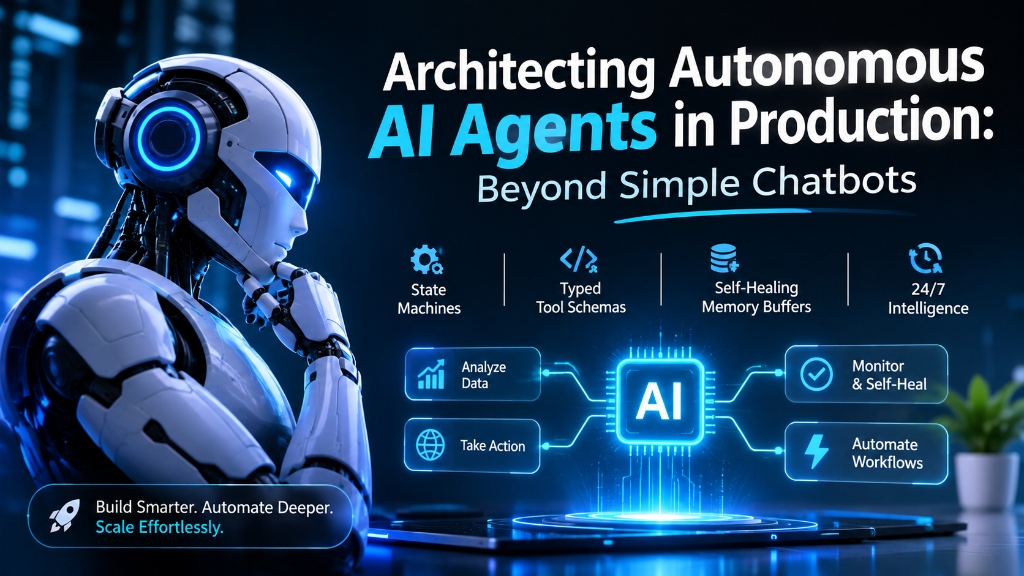
Artificial Intelligence (AI) is transforming the way we live, work, and innovate. From intelligent automation to advanced problem-solving, AI is opening new possibilities across industries. It empowers businesses to work smarter, helps developers build powerful solutions, and enables people to achieve more with less effort. As AI technology continues to evolve, understanding its potential is becoming essential for the next generation of innovators. The real opportunity isn't just using AI—it's learning how to build with it and turn intelligent ideas into meaningful impact.
The paradigm shift in artificial intelligence
Artificial Intelligence (AI) is transforming the way we live, work, and innovate. From intelligent automation to advanced problem-solving, AI is opening new possibilities across industries. It empowers businesses to work smarter, helps developers build powerful solutions, and enables people to achieve more with less effort. As AI technology continues to evolve, understanding its potential is becoming essential for the next generation of innovators.
The real opportunity isn't just using AI—it's learning how to build with it and turn intelligent ideas into meaningful impact. Moving beyond simple prompt loops to deploy production-grade autonomous systems requires robust engineering: deterministic state machines, typed tool schemas, and self-healing memory buffers designed to operate reliably 24/7.
Building an AI agent demo is deceptively easy. You set up a loop, feed an LLM a prompt, parse the text output, and watch it perform a sequence of actions. But putting that same agent into production to execute unattended business workflows—ingesting real-time data, verifying signatures, querying databases, and taking irreversible actions—reveals how fragile basic prompting actually is.
In real-world networks, external APIs timeout, rate limits trigger unexpected 429s, LLM context windows suffer semantic drift, and probabilistic models hallucinate parameters. When an agent runs unattended 24 hours a day, anything that can fail will fail. To build systems that clients and businesses can trust, we must approach agentic engineering not as prompt craft, but as rigorous distributed systems architecture.
The illusion of the simple prompt loop
Most naive agent tutorials rely on a basic loop: while True: step = model.generate(prompt). While this works in a controlled notebook environment, it fails in production for three fundamental reasons:
- Unbounded State Accumulation: Appending every intermediate observation into the conversational history quickly saturates context limits, degrades reasoning fidelity, and exponentially balloons token inference costs.
- Probabilistic Tool Execution: Free-form text parsing to invoke tools causes catastrophic failures when the model subtly alters JSON keys, omits required parameters, or hallucinates fictitious endpoints.
- Lack of Deterministic Recovery: When an external network socket drops, a naive agent gets stuck in a loop trying to re-execute the same failed call until its turn limit exhausts.
Solving these bottlenecks requires separating reasoning from deterministic orchestration.
The four pillars of production-grade agent architecture
In our client deployments—spanning financial data intelligence, automated CRM pipelines, and autonomous research bots—we structure agent runtimes around four core architectural pillars:
| Architectural Layer | Primary Responsibility | Production Implementation |
|---|---|---|
| Reasoning Engine | Intent decomposition & routing | Gemini 3.8 Flash (High multimodal reasoning & low latency) |
| State Machine Bus | Deterministic state transitions | Finite State Machine (FSM) with explicit transition guards |
| Tool Calling Layer | Type-safe external execution | Pydantic schemas with strict runtime JSON validation |
| Episodic Memory | Vector grounding & state audit | Supabase pgvector + Redis session locks |
Grounding LLM reasoning with deterministic tool calling
To eliminate hallucinated parameters, tool declarations must be strictly typed and validated before reaching the execution sandbox. We define every capability as an immutable schema that the LLM must target:
from pydantic import BaseModel, Field
from typing import Literal

class FetchMarketDataInput(BaseModel):
    ticker: str = Field(..., description="Standard stock or crypto ticker symbol, e.g. BTC, ETH, NVDA")
    timeframe: Literal["1h", "4h", "1d", "1w"] = Field("1d", description="Resolution window for candlestick data")
    limit: int = Field(100, ge=10, le=500, description="Number of candles to retrieve")

async def execute_market_tool(payload: FetchMarketDataInput) -> dict:
    # Deterministic network fetch with exponential backoff & circuit breaker
    async with MarketClient(timeout=4.0) as client:
        return await client.get_candles(payload.ticker, payload.timeframe, payload.limit)
Senior Engineer Takeaway: Never allow an LLM to directly invoke shell commands or write to persistent storage without an intermediate schema validation layer and strict permission boundaries.
Real-world case study: The Telegram News Collector agent
A flagship example of this architecture in production is our Autonomous Telegram News Collector Agent. This system operates 24/7 to continuously scan dozens of global technology, AI, and financial feeds, process complex newsletters, and publish concise, deduplicated intelligence digests.
Rather than dumping raw text into a model, the architecture executes a deterministic pipeline:
- Feed Ingestion & Normalization: Headless scrapers pull raw articles and normalize HTML structures into clean Markdown ASTs.
- Semantic Deduplication: Text chunks are embedded via
text-embedding-004and matched against a sliding 48-hour vector database. If cosine similarity exceeds 0.88, the duplicate story is merged into the master thread rather than re-processed. - Multimodal Reasoning: Gemini 3.8 Flash analyzes the article, extracts verified statistics, extracts source citations, and generates structured executive bullet points.
- Automated Telegram Dispatch: The verified digest is dispatched via Telegram Bot API with rate-limiting queues and markdown formatting.
Handling state drift and non-deterministic failures
Even with rigorous schemas, language models occasionally return malformed responses or repeat loops when confused by ambiguous content. To guarantee 99.9% uptime, we implement self-healing guardrails:
- Loop Interception: If an agent selects the same tool with identical arguments twice in succession, execution is halted, and a recovery prompt is injected: "Previous action yielded identical state. Re-evaluate strategy or ask for operator intervention."
- Fallback Summaries: When rate limits are encountered, the system gracefully degrades to cached summaries rather than dropping user sessions.
- Audit Trails: Every agent decision, intermediate thought, and tool call payload is written to an append-only JSONL log for post-mortem debugging.
Frequently asked questions
Can an autonomous agent run completely without human oversight?
For read-heavy workflows like market monitoring, news aggregation, and data classification, yes. However, for write-heavy actions such as financial transactions, database migrations, or sending public client emails, we always enforce a "Human-in-the-Loop" approval gate.
What is the typical latency of a multi-step agent turn?
With high-performance models like Gemini 3.8 Flash, a single reasoning turn with tool execution averages 800ms to 1.4 seconds. Complex multi-step reasoning cycles typically resolve in under 4 seconds.
How do you prevent agent token costs from spiraling?
We use strict sliding-window memory buffers, aggressive semantic deduplication before invoking the model, and prompt caching to avoid re-transmitting unchanging tool definitions.